The 200-Page RFP Problem: Bid More, Win More
Your bid volume isn't capped by your market. It's capped by how fast one person can read a 200-page RFP. Lift that ceiling and you don't save a few hours — you triple the work you put out for bid. This is a pipeline engine, not a time-saver.
Speed wins the bid
Ask a contractor how they grow, and they'll talk about hiring, about relationships, about getting into a new market. Almost no one says the real answer out loud: you grow by bidding more work and winning more of it. Everything else is in service of that. And the thing quietly holding it back isn't your salespeople or your market — it's how many RFPs your estimating team can physically get through.
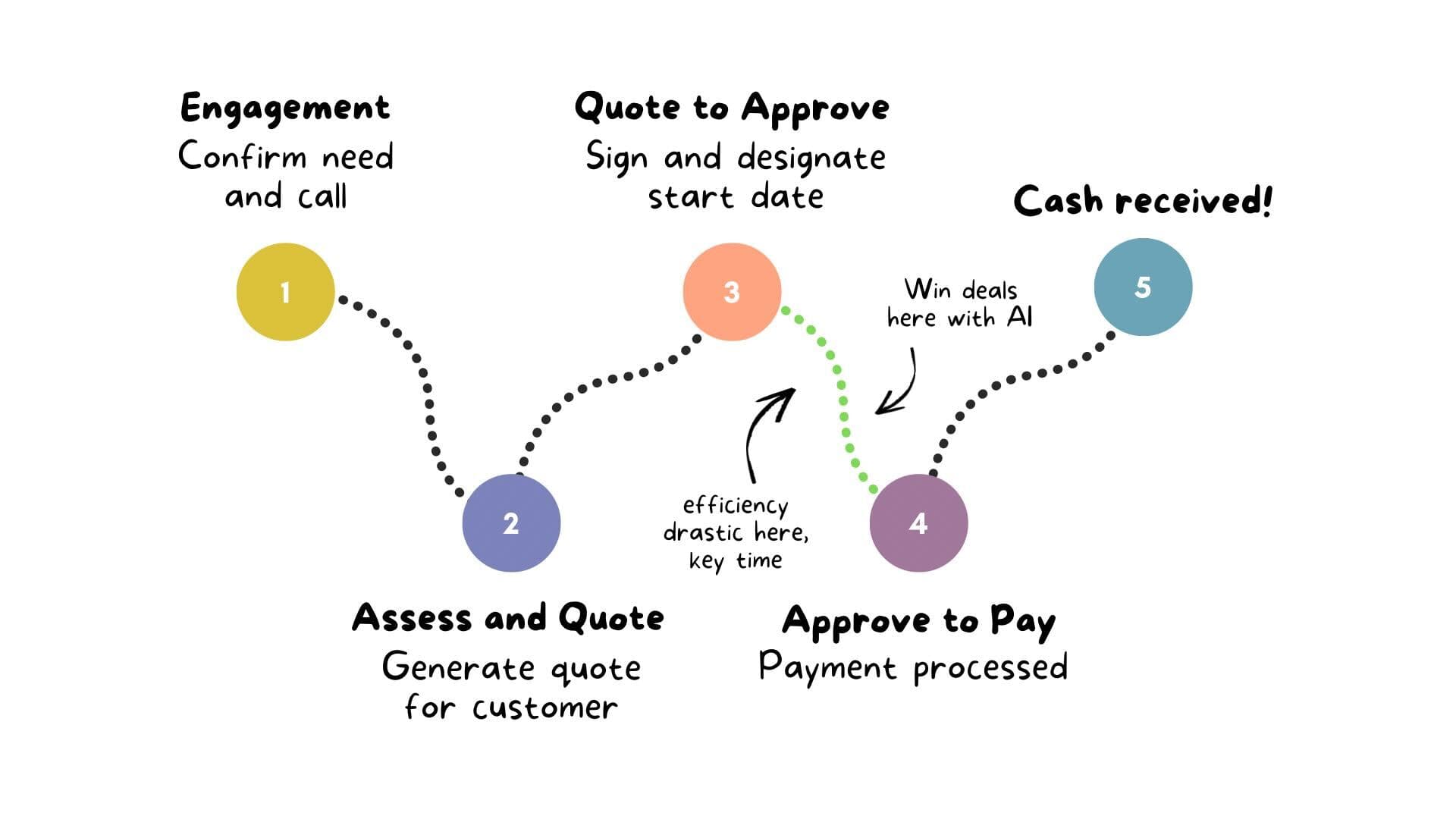
Here's the chain, and it's tighter than most owners admit. More bids submitted means more jobs won. More jobs won means more revenue. So bid volume is the lever. But every bid starts with someone reading a bid package — often 150 to 250 pages of scope, specs, exclusions, addenda, and fine print — and deciding what to price. That reading is slow, it's manual, and it usually lands on one or two senior people. Which means your entire pipeline is throttled by the reading speed of your most expensive, most overloaded employees.
The bid you didn't have time to read isn't a missed task. It's a job you removed yourself from the running for, before anyone even quoted it.
Bid volume is capped by throughput, not by ambition
Walk it through. A commercial sub or GC wants to grow the top line, so the instinct is "bid more." But the estimating team is already maxed — every RFP that comes in competes for the same scarce hours. So in practice, the team triages by panic: whatever's loudest or closest to deadline gets read, and the rest pile up until the clock runs out on them. Bids don't get lost on purpose. They time out.
And you can't simply hire past it. The labor market won't let you. 92% of construction firms report difficulty filling positions, and estimating is one of the hardest seats to fill — a senior estimator is the product of years of judgment you can't shortcut. With roughly 41% of the construction workforce heading toward retirement by 2031, the bench behind your best estimator is thin and getting thinner. The plan of "we'll just add estimators to bid more" is running out of people to execute it.
So if you can't add people, the only way to bid more is to get more bids out of the people you have. Not by working them harder — they're already at capacity — but by removing the slowest, most mechanical part of their job: the first read.
Clear the bottleneck, and the pipeline multiplies
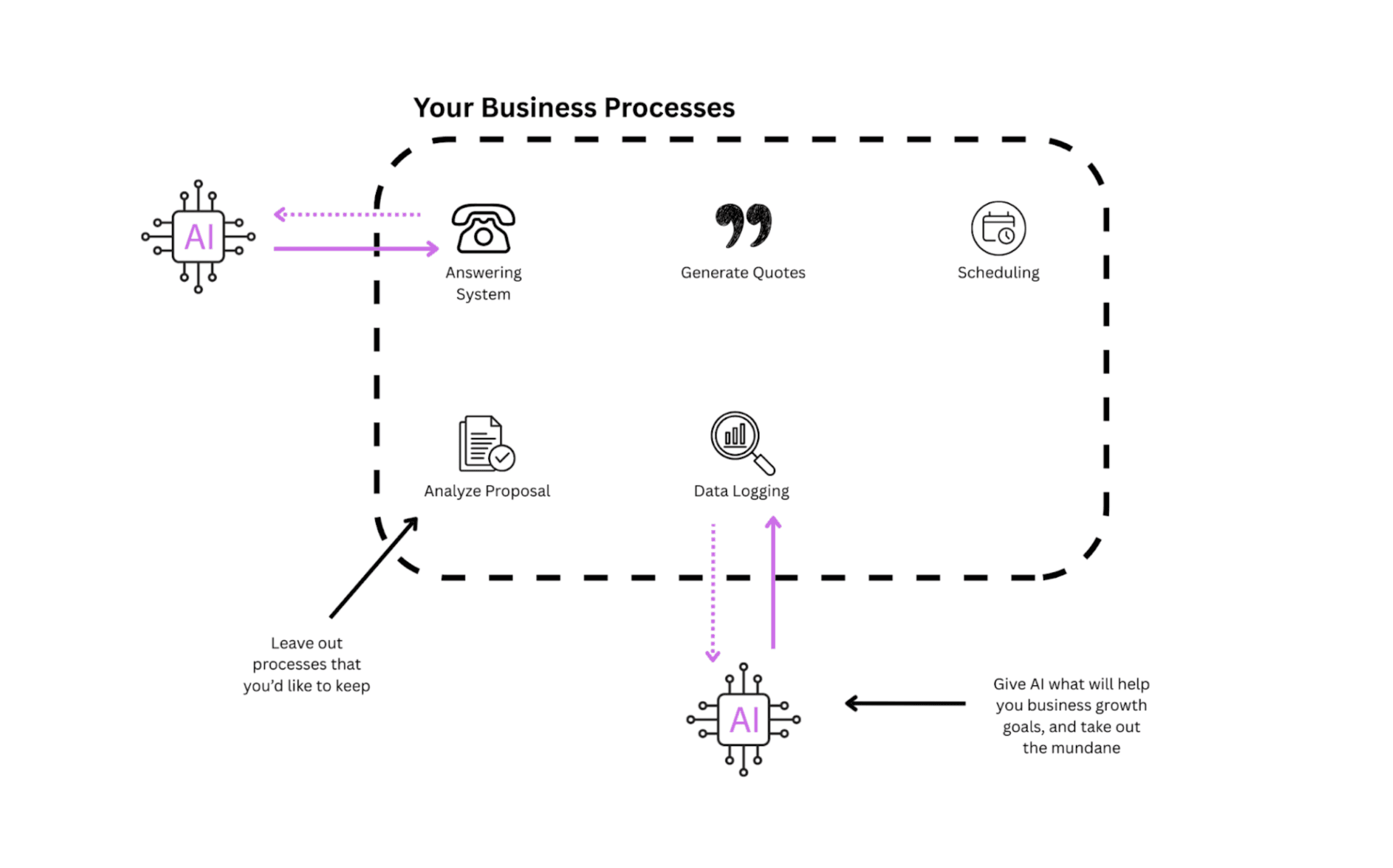
This is where it stops being a time-savings story and becomes a growth story. When AI does the first pass on an RFP — pulling scope, flagging exclusions and unusual terms, surfacing the bid date and bond requirements, structuring the whole package into something an estimator can act on in minutes instead of hours — you haven't just saved that estimator an afternoon. You've raised the number of bids the same team can put out the door.
And that number is the whole game.

Think about what triples when throughput triples. Same estimators, same payroll, same overhead — but three times the bids in play. In a business where win rate is relatively stable, three times the bids out is something close to three times the jobs won. That's not a 5% efficiency gain you report in a meeting. That's a different revenue trajectory, unlocked without adding a single salary.
This is the part worth being blunt about: faster RFP review doesn't change how your team works. It changes how your business operates. A company that can credibly chase three times the work is competing in a different weight class — bidding jobs it used to pass on, entering markets it couldn't staff for, showing up on bid lists it never had the capacity to make. The constraint that defined what you could go after just moved.
More shots — and better aim
Now the objection, because it's the smart one: "If I just bid everything, I'm wasting effort on jobs I'll never win." Correct — and that's exactly why throughput and discipline are the same upgrade, not a tradeoff.
The reason teams chase the wrong bids today is that they don't have time to tell the good ones from the bad ones. With no capacity to triage, you either bid a little of everything and spread yourself thin, or you tunnel on a few and miss the rest. Both leak. When the first read is instant, you can actually score every RFP — value, fit, win probability, red flags — and make a real bid/no-bid call on each one. You say yes to more of the right work and no to the long shots faster.

That's the combination that actually moves a business: more bids out and a higher hit rate, at the same time, from the same team. Volume without discipline just burns estimator hours on losers. Discipline without volume leaves work on the table. Lift the throughput ceiling and you get both — you bid more, and you bid smarter, because for the first time you can afford to look at everything before you decide.
The firms that win the next five years won't be the ones that hired the most estimators — the people aren't there to hire. They'll be the ones who stopped letting a 200-page PDF decide how much work they're allowed to go after. Bid volume is the lever on growth. RFP throughput is the lever on bid volume. That's the whole chain, and it's finally one you can pull.
Throughput figures are illustrative examples, not guaranteed results. Industry statistics are cited from public sources including AGC and Deloitte/NCCER.

Get the research, straight to your inbox.
One email every other Tuesday. New papers, open benchmarks, and the occasional dataset release. No fluff, no sales nurture sequence. Unsubscribe any time.