The Concrete Quote That Loses Money Before the Truck Leaves the Yard
A rep quotes a job in four minutes, wins it, and the plant still loses margin. Not because the price was too low — because the quote was never the whole price. Here's where ready-mix margin leaks out, and why it happens before a single yard is poured.
Speed wins the bid
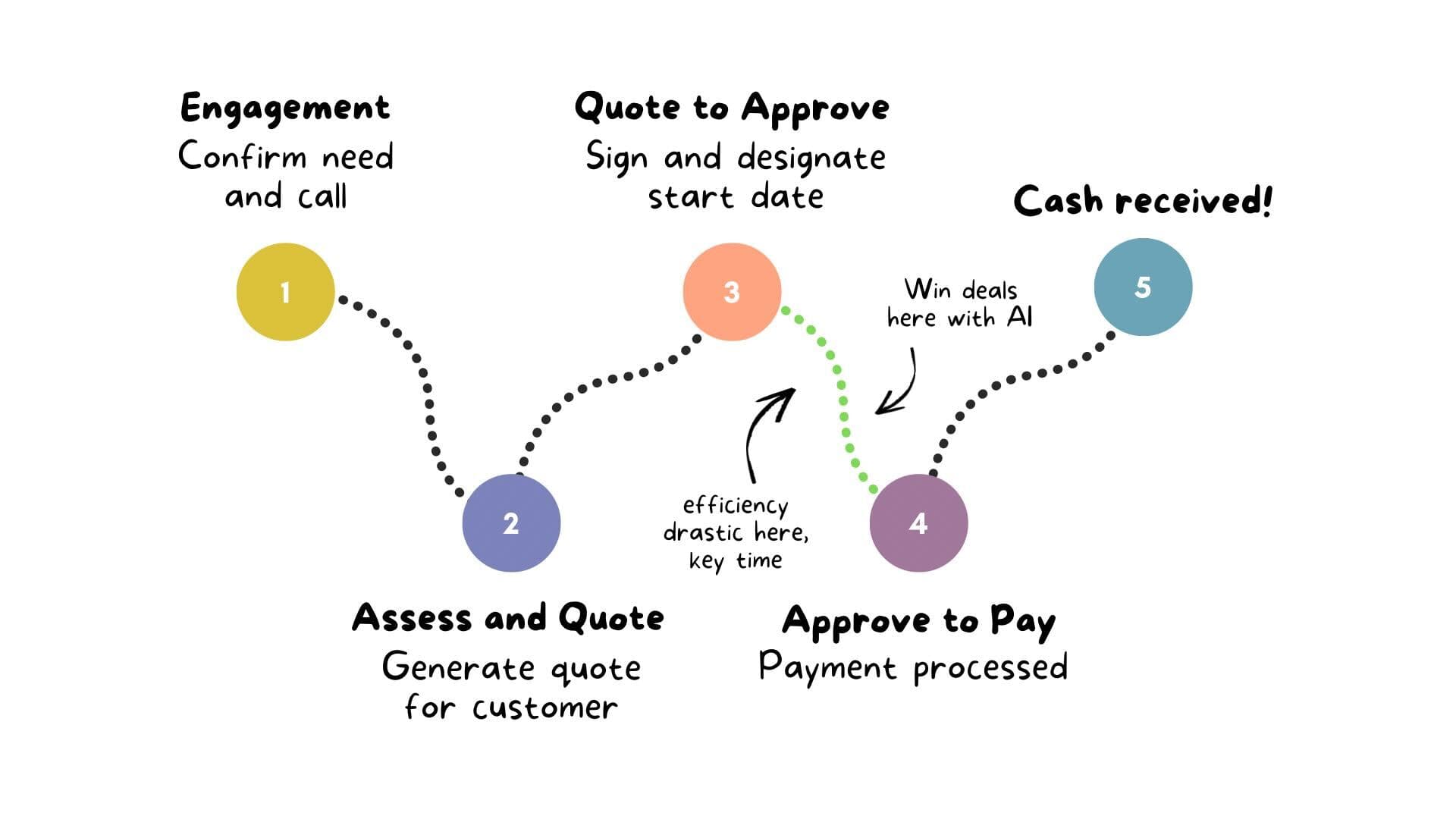
Ask a concrete sales rep how they quote, and the honest answer is usually some version of: fast. A contractor calls with a job, the rep pulls a price per yard from the sheet or from memory, adds a number that feels right, and sends it before the next call comes in. Speed wins bids — the first credible number anchors the buyer, and in ready-mix the buyer is rarely waiting for a fourth quote.
The problem is what that speed leaves out. A price per yard is not a cost. It's a placeholder for a cost the rep hasn't actually assembled yet — and by the time the real cost shows up, the truck has already left the yard and the margin has already left with it.
This is the quiet way ready-mix producers lose money: not on the jobs they price too cheap, but on the jobs they price incompletely. The number looked healthy. The job wasn't.
"It's just concrete" is where the margin dies
The most expensive belief in a ready-mix sales office is that concrete is a commodity. If it's a commodity, the only lever is price, and the only way to win is to be cheaper than the plant down the road. So reps quote on price per yard, race to the bottom, and hand away every reason a contractor might pay them more.
But concrete isn't a commodity to the contractor pouring it. It's a schedule risk. A late truck idles a crew. An inconsistent slump between loads means rework. A dispatch team that can't sequence a big pour costs the contractor labor and daylight. Those things are worth real money — and they're exactly what gets thrown away the moment a quote becomes a single number with a dollar sign in front of it.
When the conversation is only about price per yard, the rep is competing on the one dimension where there's no margin to defend. Everything that actually differentiates the plant — reliability, consistency, dispatch coordination — never makes it into the quote, because the quote was built to be fast, not complete.
The four layers that leak
Walk a "losing" quote backward and the same gaps show up again and again. None of them are exotic. Each one is a defensible cost the rep simply didn't assemble before hitting send.
01 — The mix the spec actually required. The rep quotes a standard mix; the structural spec calls for a higher strength, a specific design, or a submittal that follows the ACI flowchart. The right mix costs more to produce — but the quote was priced on the wrong one, and the difference comes straight out of margin.
02 — Admixtures, water reducers, and the fine print. Self-consolidating mixes, accelerators, retarders, fiber — the additives that make a pour work in the real conditions of the job. They require precise dosing and they aren't free. Quoted as an afterthought, they're a cost the plant eats.
03 — Freight, haul, and the tight-access site. Distance, drive time, a downtown pour with no place to stage trucks, a remote site down a bad road. Freight is one of the biggest swing factors in a concrete quote and one of the easiest to underprice when the number is being pulled from a regional average instead of the actual job.
04 — Pumping, short loads, and the missing escalation clause. A pump that wasn't included. A short-load fee that should have applied and didn't. And the one that hurts most on a long-lead job: no price-escalation clause, so when cement or aggregate moves between the quote and the pour, the plant absorbs the increase instead of the customer.
Individually, any one of these is a rounding error. Stacked across every quote a busy plant sends in a month, they're the difference between a healthy margin and a mystery at month-end.

The number you can't see until it's gone
Here's the part that should bother every plant owner: margin is just price minus cost, and both sides of that equation need to be accurate before the quote is sent. In most ready-mix sales offices, only one side is.
The price is right there — the rep typed it. The cost is a guess, assembled later, often not until the job closes out and the controller reconciles what it actually took to pour. By then the decision is made, the concrete is set, and there's nothing to do but log the lesson.
This is why so many producers genuinely don't know which jobs make money and which ones quietly don't. It's not negligence — it's that the quote was never built to show margin in the first place. You can't manage a number you can't see at the moment you're committing to it.
And the fix isn't "quote slower." Slowing down to hand-assemble every cost would kill the speed that wins the bid in the first place — you'd trade margin leaks for lost deals. The contractor still acts on the first credible number, and now you're not it.
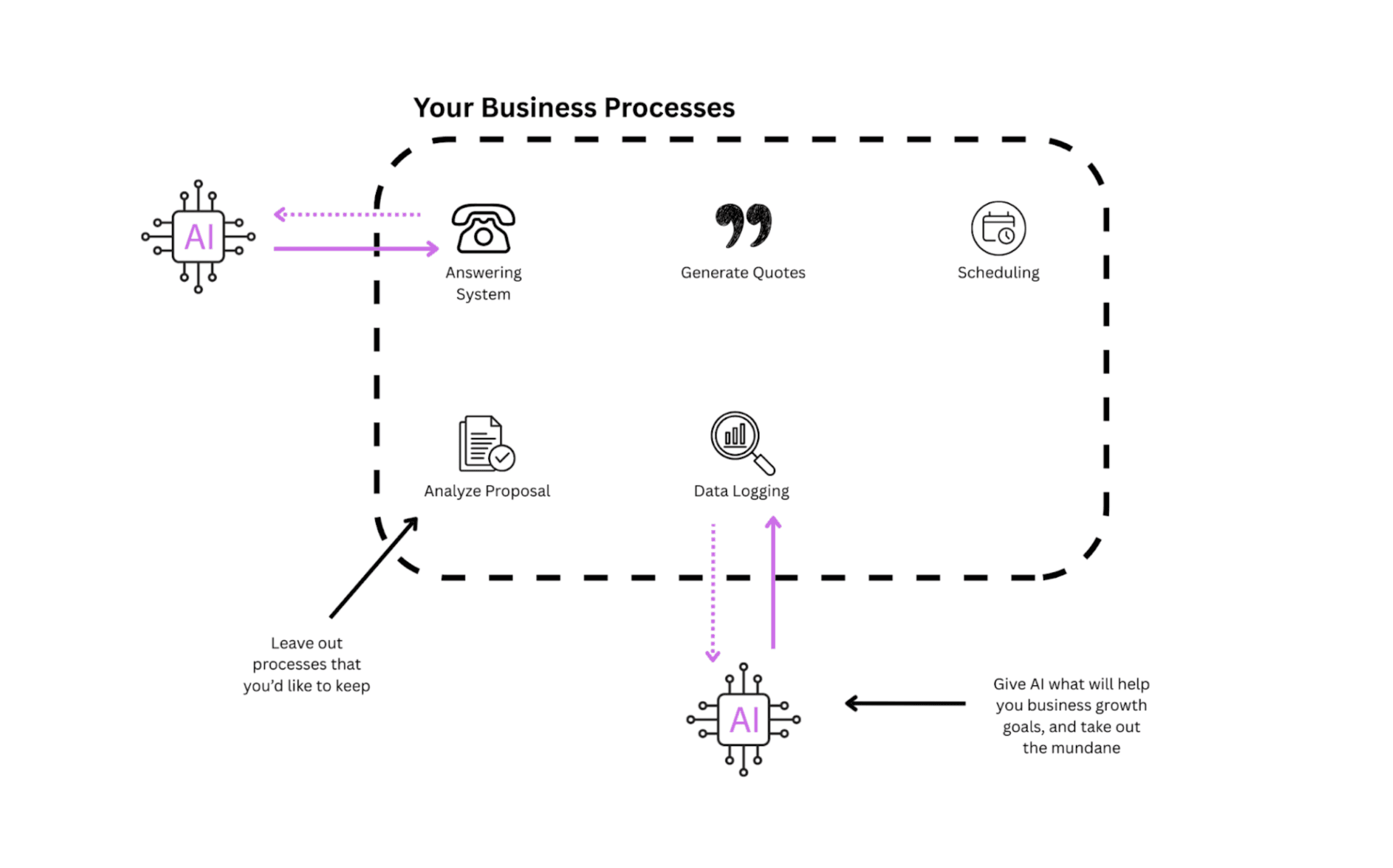
The actual fix is to make the complete cost assemble itself at quote speed — so the rep gets the velocity that wins the bid and the visibility that protects the margin, in the same four minutes.
What changes when the quote assembles itself
Imagine the rep takes the same call, prices the same job, and hits send just as fast as before — except now the quote has already pulled the right mix design behind the scenes, factored the admixtures the spec requires, calculated real freight to the actual site, added pumping and any short-load fee, and applied an escalation clause for the lead time. And next to the price the customer sees, the rep sees one more number the customer doesn't: the live margin on this job, right now, before send.
Nothing about the rep's speed changes. What changes is that "fast" and "complete" stop being a trade-off. The commodity race becomes a margin decision. And the mystery at month-end becomes a number the rep was looking at the whole time.

Ready-mix has always run on speed and relationships, and it always will. The plants that hold their margin in the next few years won't be the ones that quote slower or chase the lowest price. They'll be the ones whose quotes carry the full cost of the job — automatically, at the counter, before the truck ever leaves the yard.
Figures shown are illustrative examples for explanation, not customer averages.

Get the research, straight to your inbox.
One email every other Tuesday. New papers, open benchmarks, and the occasional dataset release. No fluff, no sales nurture sequence. Unsubscribe any time.